
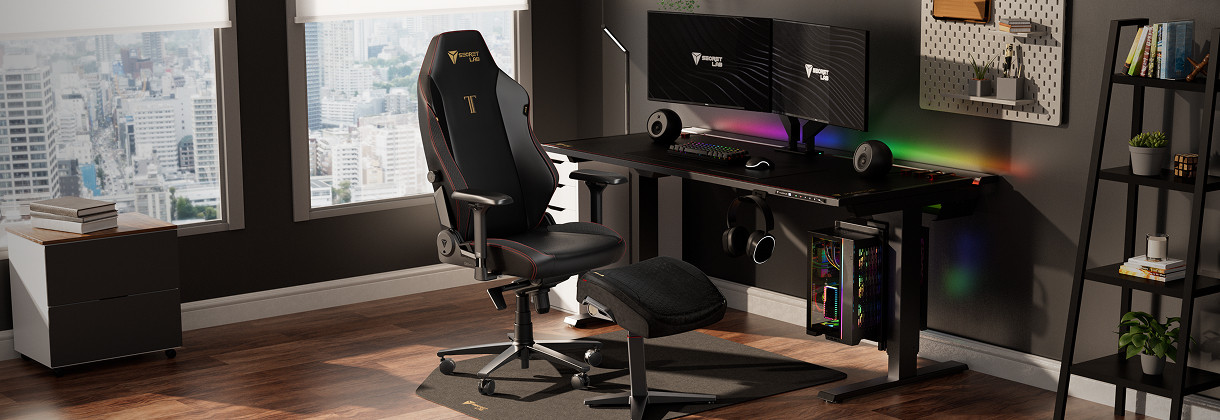

For millions of people, sitting takes up most of the working day. When work ends, many of us simply move from the office chair to the car, couch, or dining table.
That eventually takes a toll on your body. Low back pain affected an estimated 619 million people worldwide in 2020, or roughly 1 in 13 people, and is the world's leading cause of disability.
It also affects how we work. Back pain can make it harder to concentrate, move comfortably, and perform everyday tasks. Research has linked low back pain with both reduced performance while at work — known as presenteeism — and time away from work.
The problem isn't sitting itself. It's sitting for too long without enough movement or support.
What long hours of sitting can do to your back

Your body isn't designed to remain in any single position for hours at a time.
The longer you sit without changing position, the longer the same muscles and tissues are subjected to sustained loads. Over time, this can contribute to muscular fatigue and discomfort, particularly around the lower back, neck, and shoulders.
Posture also tends to change as you tire. Your pelvis may rotate backward, flattening the natural curve of your lumbar spine. Your upper back rounds, your head moves forward, and your muscles have to work harder to support you.
At the same time, prolonged sitting keeps your spinal discs under sustained load. Studies have found that as little as 4 hours of uninterrupted sitting can cause discs to temporarily decrease in height. This can place greater mechanical stress on disc tissues, which may contribute to tissue damage and increase susceptibility to herniation. Regularly changing position helps vary these loads instead of repeatedly stressing the same tissues.
Even sitting in a so-called "perfect" posture for eight hours places strain on your back. The problem is the lack of movement. Cornell ergonomics guidance recommends breaking up sitting with regular periods of standing and movement rather than replacing prolonged sitting with prolonged standing.
This is why a good ergonomic setup shouldn't restrict you to a single posture. It should make it easier to move between different comfortable, supported postures throughout the day.
What is the 20-8-2 rule?

The 20-8-2 rule is a simple framework developed by Cornell University ergonomist Alan Hedge to introduce more movement into the working day.
For every 30 minutes:
-
Sit for 20 minutes
-
Stand for 8 minutes
-
Move for 2 minutes
Over an 8-hour working day, that works out to over five hours sitting, two hours standing, and 30 minutes moving.
But these numbers are not hard targets. The important principle is to change position frequently and move regularly. Swapping eight hours of sitting for eight hours of standing won’t do much good if you’re just standing still the entire time.
Those two minutes of movement are important. Walking to get water, stretching, taking the stairs, or simply moving around the room helps break up prolonged static postures. Cornell notes that frequent movement breaks can improve comfort and work performance while reducing musculoskeletal risks.
How a good ergonomic chair can help with back pain

An ergonomic chair cannot compensate for sitting still all day. But it can encourage movement and reduce the chances of stress injuries.
Support the natural shape of your spine
Your spine has natural curves that help distribute loads through the body. Dedicated lumbar support helps support the inward curve of your lower back, reducing the tendency to collapse into a slouched position as you tire.
That’s why both Secretlab TITAN Evo and ATLAS™ feature full-height, contoured backrest that extends support across more of your back, helping distribute pressure and reducing the muscular effort required to hold your torso upright.
Fit the chair to your body
There is no single chair position that works for everyone.
Adjustable armrests support the weight of your arms while accommodating different shoulder widths, elbow heights, postures, and desk setups. Adjustable seat depth lets shorter users avoid excessive pressure behind the knees while giving taller users sufficient thigh support.
The more precisely the chair fits you, the less hard your body has to work.
Both Secretlab TITAN Evo and ATLAS™ are equipped with adjustable armrests that can be tailored to different body types and setup layouts. Secretlab ATLAS™ also allows for seat depth adjustments that help with optimal pressure distribution in your thighs.
Support movement, not perfect posture
Perhaps most importantly, a good ergonomic chair should move with you.
A recline or tilt mechanism lets you regularly change the angle between your torso and thighs and redistribute pressure across your body. Instead of forcing you to maintain one upright position, it allows you to move between different supported postures as you work.
Your chair’s seat base and backrest should also be shaped to allow natural movement, instead of forcing you into a single posture.
Secretlab TITAN Evo and ATLAS™ are designed around this freedom to move. Every curve is carefully shaped to provide optimal support without ever restricting your posture. Lean back, sit cross-legged, or even recline for a nap — TITAN Evo supports the full range of postures across everything you do. On the other hand, Secretlab ATLAS™ is designed for more task-oriented support and focused work, allowing you to switch between upright sitting for focus and a gentle recline.
In the words of Dr. Stuart McGill, one of the world’s leading experts on back pain, the best posture is your next posture.
Reviewed by the Secretlab Product & Ergonomics Team
Frequently asked questions
Q: Which chair is best for sitting long hours in an office?
A: The best chair for long office hours is one that fits your body and moves with you, featuring adjustable lumbar support, seat depth, armrests, a full-height backrest, and recline. Secretlab TITAN Evo supports the full range of postures, while Secretlab ATLAS™ is built for more upright sitting for focused task work.
Q: Is sitting 8 hours a day bad even with a good chair?
A: Sitting places a lot of strain on your body. Good ergonomic chairs like Secretlab TITAN Evo and Secretlab ATLAS™ reduce the strain of sitting by distributing your weight more evenly, supporting your body so your muscles don't have to work as hard, and encouraging natural movement.
Q: How often should you stand up when working at a desk?
A: The 20-8-2 rule provides a good starting point. For every 30-minute block, aim for roughly 20 minutes of sitting, 8 minutes of standing, and 2 minutes of moving.